


Inflammation of the urinary tract is a common problem not only in women;half of humanity also suffers from this disease, but less often due to physiological characteristics.The main symptoms of cystitis in men: increased frequency of urination and its pain, discomfort and pain in the suprapubic region, impurities in the urine.Therapy includes the use of antimicrobial drugs and various procedures.
What is cystitis?
Bacterial infection leads to inflammation of the bladder.It occurs when pathogens enter the target organ through the urethra.The disease is classified as a lower urinary tract infection.The male urethra is longer than the female urethra, so cystitis is less common in the stronger half of humanity than in women.
Reasons
Following simple rules of personal hygiene will allow a young man to avoid cystitis with almost 100% probability.In old age, the risk of disease increases.Cystitis is often caused by other diseases, such as urethral stricture, urolithiasis and chronic sexually transmitted infections.A weakened immunity is also a trigger, and this is often caused by the use of cytostatics and hormonal drugs.
The cause of cystitis in women is an ascending infection from the urethra, vagina, anus, while in men it spreads from the urethra, epididymis, prostate, and seminal vesicles.The presence of urological problems that lead to narrowing of the urethra and stagnation of urine can cause the disease.Clogging of the urethra with any foreign body, stones, diverticula (protrusion of the organ wall), prostate adenoma can lead to cystitis.
Since the infection is difficult to penetrate into the male bladder, cystitis can appear against the background of other diseases, such as vesiculitis, orchitis, urethritis, prostatitis and epididymitis.Urogenital infection occurs when infected with ureaplasma, treponema pallidum (syphilis), gonococcus, mycoplasma, staphylococcus, streptococcus, enterobacterium, enterococcus, trichomonas, chlamydia, proteus, herpes virus, papilloischema virus, cytomegalovirus, Pseudomonas, fungus (candidiasis), Klebsiella, Listeria or coliform bacteria.
The infection can also be descending if it is caused by kidney tuberculosis or pyelonephritis.Favorable conditions for the development of cystitis can be the presence of bad habits, stress, poor diet, excessive physical activity.Sinusitis, flu, chronic tonsillitis, although they first affect the respiratory system, can spread to other organs through the bloodstream and introduce bacteria into the bladder.This leads to the fact that cystitis often occurs as a complication of infectious diseases.
The infection can be introduced by doctors in the hospital during catheterization or cystoscopy.Other factors that contribute to the development of the disease are diabetes mellitus, hypothermia, stress, lack of sleep, abdominal surgery, prostate resection, transurethral surgery and malignant tumors of the urethra and prostate.

The first signs of cystitis in men
If an inflammatory process is suspected, treatment should not be delayed.Cystitis in men is diagnosed and antibiotics are prescribed.The first signs of the disease can be detected independently if:
- frequent urination
- pain in the lower abdomen;
- burning during urination;
- blood, mucus and pus in the urine;
- general weakness, temperature above normal (37°C).
Symptoms
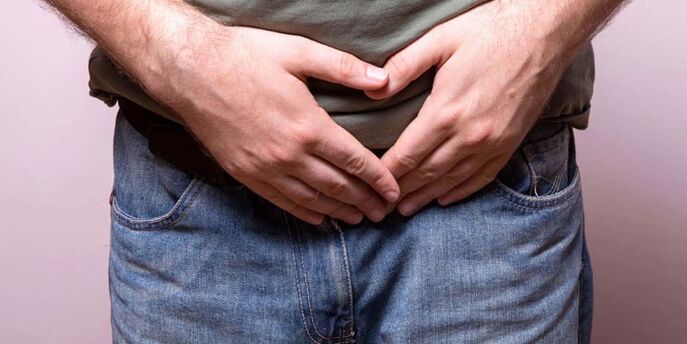
Cystitis in men is determined by pronounced symptoms.The development of the disease in an acute form is indicated by an increased frequency of urination, difficulties and painful sensations in the lower abdomen, and cloudy urine.If these phenomena occur, it is necessary to visit a urologist as soon as possible.A frequent urge to urinate is one of the main symptoms of cystitis, while a very small amount of fluid can come out during one trip to the toilet, and incontinence often occurs.
With cystitis, a man may have to strain to urinate.There are also painful sensations, burning or stinging, which are especially strong at the beginning and in the final phase of urination.The pain is of different strength and intensity and may be accompanied by unpleasant sensations in the penis, perineum and pubic area.Symptoms of cystitis in men are accompanied by increased body temperature, headache, fatigue, weakness, increased sweating, chills and decreased appetite.
In the hemorrhagic, gangrenous form of cystitis, the urine becomes cloudy.There may be blood and mucus in it, and a sharp, unpleasant smell of rot appears.The volume of urine decreases to 400 ml per day.Symptoms of cystitis in men are mild if the chronic form is observed.The pain is almost not felt, the frequency of urination increases slightly, and only mucus is present in the urine.This form of the disease has periods of exacerbation and remission.
Chronic cystitis
This form is characterized by few symptoms and often has a continuously stable or undulating course.So, the complications of cystitis in men in a chronic form are as follows:
- leukocyturia persists (increased number of leukocytes in the urine);
- pyuria (presence of pus in the urine);
- proteinuria (excretion of protein in the urine above normal);
- macroscopic or microscopic hematuria (presence of blood in the urine);
- the presence of mucus in the urine.
Spicy
This form of cystitis has extensive symptoms.The main manifestations that indicate the acute phase are the following:
- frequent urination, including nocturia (overcoming nocturnal diuresis);
- imperative urges;
- stranguria (pain, difficulty urinating);
- cloudy urine;
- terminal hematuria;
- fever, chills, reduced ability to work;
- pain, burning and stinging when urinating,
- pain in the suprapubic region, penis, groin, scrotum;
- decrease in urine volume (up to 10-20 ml);
- development of incontinence;
- leukocyturia, hematuria, pyuria.
- intoxication (with hemorrhagic, gangrenous or phlegmonous form);
- cloudy color of urine, putrid smell of secretions, presence of impurities of cut and mucus.
Treatment
Prevention of cystitis in men is important for the prevention of bladder inflammation.If it was still not possible to protect yourself and if the first signs of the disease appear, it is necessary to visit a specialist as soon as possible.Therapy is prescribed only after the urologist has collected a complete medical history and performed examinations.Acute cystitis, accompanied by severe pain and persistent retention of urine, will require hospital treatment and a detailed study of the processes taking place in the body in order to determine the type of pathogenic microorganism.The following are recommended as general therapies:
- Bed rest during the acute period of the disease, use of antipyretics, consumption of large amounts of liquid (up to 2.5 liters per day), adherence to a diet lacking acidic, spicy and salty foods in the diet.
- Antibiotics.Once the pathogen is identified, antimicrobial agents are prescribed.The most common are fluoroquinolones, nitrofurans and cephalosporins.Medicines are taken for a week.
- Phytotherapy.Diuretic and anti-inflammatory herbal medicines are effective against cystitis.Herbal teas (bearberry, horsetail, cranberry leaf) will be useful for this disease.Such drugs have a supportive effect and help relieve inflammation.You must be aware of the possibility of an allergic reaction to the plants.Cranberry juice or a fruit drink will be helpful;tablets containing cranberry extract are effective.Such drugs reduce the concentration of antibiotics, so they can be used after the end of treatment.
- Antispasmodics and nonsteroidal anti-inflammatory drugs will help relieve pain.
- Some sexually transmitted infections can lead to cystitis in men.The treatment regimen is prescribed by a specialist.
- Immunomodulators and probiotics.Such drugs help the body to recover after a course of antibiotics.They are not directly involved in the treatment of the disease.Immunomodulators help the body fight against pathogens, and probiotics restore intestinal microflora.
- The course of treatment depends on accompanying diseases, such as pyelonephritis, urolithiasis, adenomectomy, prostatitis.Therapy for these diseases is necessary to cure cystitis.
- Bladder lavage.In some cases, this procedure is recommended using an antiseptic;the use of novocaine blockades is effective.
- Physiotherapy.At the end of the acute period of the disease, in order to speed up the body's recovery and resorption, ultrasound procedures, UHF, mud therapy, magnetic laser therapy, and electrophoresis are used.